

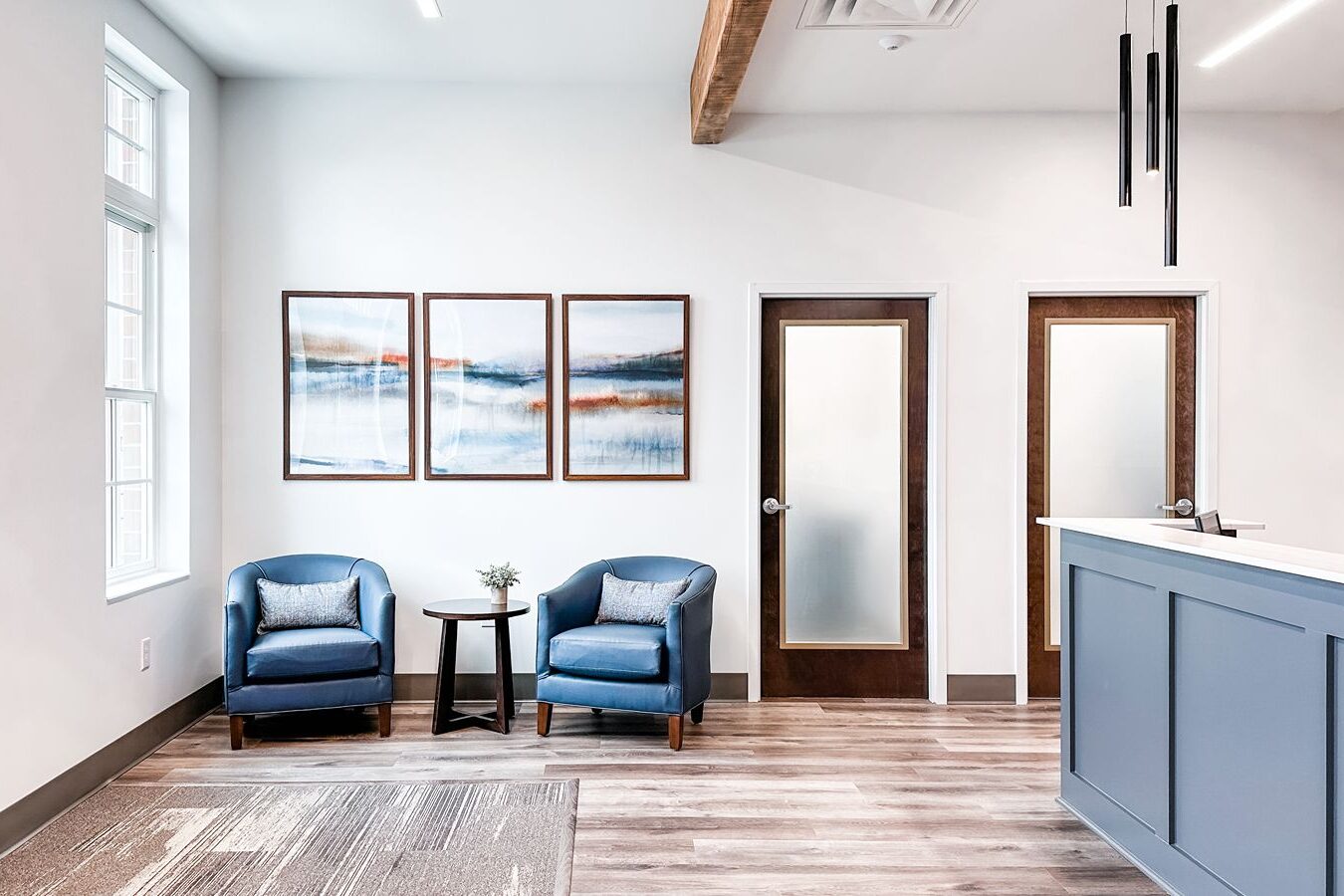
Choosing the right office interior designer in Atlanta is a bigger decision than most people expect. Your space affects how people work, how clients perceive you, and how your team feels day-to-day. And in a city full of talent, it’s easy to get distracted by a pretty portfolio without knowing how to compare firms in a way that actually protects your budget, timeline, and sanity.
This guide breaks down what to look for and what to ask—so you can choose a designer who understands your goals, communicates clearly, and delivers a space that performs as well as it looks. And if you’re exploring partners right now, this is exactly how we approach corporate and office projects at Progress Studio: practical, collaborative, and built for the real world—not just the reveal.
1. Define Your Goals
The goal here is straightforward: help you make a smart hiring decision that leads to a better workplace. Office design impacts workflow, how teams collaborate, how your brand shows up in real life, and how your space supports growth over time.
Below, we’re breaking down what to look for, what to ask, and what to confirm—so you can move forward with clarity (and fewer surprises).
Before you start interviewing designers, take a moment to get aligned internally. You don’t need a 40-page brief—just clarity on what’s not working, what success looks like, and what constraints you’re working within.
Start with what you want to improve:
- Workflow efficiency (what’s slowing people down right now?)
- Collaboration patterns (too loud? too siloed? not enough meeting space?)
- Space utilization (are you paying for square footage no one uses?)
- Brand expression (does your office feel like “you” or like a generic suite?)
- Employee comfort + retention (lighting, acoustics, ergonomics, amenities)
Start with questions like:
- What’s slowing people down in the current space?
What types of work happen most often—focus, collaboration, client meetings, hybrid calls? - Do you need to support growth, hiring, or departmental changes in the next 12–24 months?
- What do you want the office to feel like for employees and for clients?
Then build your priorities:
- Must-haves (non-negotiables)
Nice-to-haves (only if budget allows)
Budget doesn’t need to be perfect on day one, but you do need a realistic range and an understanding that office design is more than finishes—it includes planning, furniture needs, construction coordination, and lead times.
At Progress Studio, our discovery process is designed to help you turn those goals into a clear scope—so you’re not guessing where the budget should go first or making decisions in the dark.
2. Review Experience & Portfolio in Atlanta Office Spaces
A great designer is not automatically a great office designer. Commercial and corporate interiors come with a different level of complexity—coordination, code considerations, scheduling, and real-world functionality that has to hold up long after move-in.
When you review portfolios, look specifically for:
- Office and corporate work (not just residential or hospitality)
- Projects similar in scale and complexity to yours
- Evidence of planning—not just final photos (layouts, phased approaches, problem-solving)
- Work that balances brand expression with practical performance
Local familiarity matters too. Atlanta projects can vary widely depending on building type, landlord requirements, and permitting logistics. You’ll want a team that understands how the market works and can help you anticipate the friction points before they become delays.
If you’re comparing firms, it helps to look for examples where workplace function and client experience are both considered. That’s the lens we bring to our corporate work—spaces that look sharp, support workflow, and feel intentional from the moment someone walks in.
3. Evaluate Their Design Process & Collaboration Style
Portfolio gets attention. Process is what keeps the project on track.
A solid office interior designer should be able to explain their process in a clear sequence—how they move from discovery to planning to concept to decisions to documentation and construction support. If it feels vague or overly “we’ll just wing it,” that’s a red flag.
Look for a process that includes:
- Discovery and workplace needs assessment
- Space planning and layout options
- Concept direction (with checkpoints, not endless drifting)
- Finish and material selections that match your brand and performance needs
- Furniture planning and integration
- Documentation that supports the build
- Coordination support through construction and install
Collaboration matters just as much. Ask how decisions are made, how feedback is gathered, and how updates are communicated. You want a team that can lead the project confidently while keeping you informed without overwhelming you.
At Progress Studio, we keep projects structured and collaborative—clear milestones, decisions documented, and an approach that’s flexible enough to adjust as goals evolve. The best process feels steady, not chaotic.
4. Confirm Local Knowledge of Atlanta Codes, Permitting & Logistics
Even the best design won’t matter if it can’t be permitted, built, and delivered smoothly.
A strong office interior designer will understand:
- Accessibility requirements and code implications
- Coordination expectations with contractors and consultants
- How to plan for lead times, substitutions, and availability constraints
- How to reduce surprises during construction
Ask who is responsible for what—especially around permitting and coordination. Some firms manage a lot internally, others coordinate closely with your contractor, and some may not provide meaningful construction support at all. None of these are “wrong,” but you need to know what you’re getting.
Our team is used to coordinating early with contractors and consultants so design decisions stay aligned with pricing, timeline, and buildability—before they turn into delays or budget surprises.
5. Look for Budget Transparency (and Clear Scope)
Your proposal should not feel like a mystery novel.
Ask for a clear breakdown of:
- What’s included in each phase
- What deliverables you’ll receive
- What’s optional vs. included
- How revisions are handled
- How changes are priced and documented
Also confirm:
- How many rounds of revisions are typical
- What triggers additional fees
- How furniture and procurement support works (if applicable)
- How payment schedules are structured
A transparent designer makes budgeting easier—not because they magically reduce costs, but because they help you understand tradeoffs and make smarter decisions.
We break our proposals into clear phases and deliverables so you can see exactly what you’re paying for, what’s optional, and where decisions affect cost. It’s not about being rigid—it’s about being clear.
6. Make Sure They Can Translate Culture and Brand Into Space
The best workplaces feel like they belong to the people who work there.
A designer should be able to connect the dots between your brand and your physical environment—without turning your office into a themed experience. This is about creating a space that feels consistent, intentional, and aligned with how your team actually operates.
To evaluate brand alignment, ask:
- How do you approach translating brand into materials, layout, and key moments?
- How do you balance employee comfort with client-facing impressions?
- How do you create a space that supports both focus and collaboration?
Bring what you can:
- Brand guidelines (even if minimal)
Notes from employees on what they want improved - A list of workplace norms and priorities
We approach workplace design like brand strategy in 3D—layout, materials, lighting, acoustics, and the “moments that matter” all reinforcing who you are and how you want people to feel in your space.
Getting Started With an Office Interior Designer in Atlanta
Before you sign with a designer, make sure you have clarity in writing—not assumptions.
Confirm you understand:
- Deliverables (exactly what you’ll receive and when)
- Timeline and major milestones
- Communication rhythm and point of contact
- Revision expectations
- Contractor coordination and construction support scope
- Post-install support (what happens after move-in)
And don’t skip the basics:
- Ask for references (ideally for office projects similar to yours)
- Confirm insurance/licensing requirements as needed
- Ensure scope and responsibilities are clearly defined
If you’re exploring partners now, here are a few learn about our team and approach: Who We Are (Progress Studio)


